
Imagining Tomorrow
Things aren't working today. A look into novel ideas to reinvigorate and defend the only democracy we've ever known.

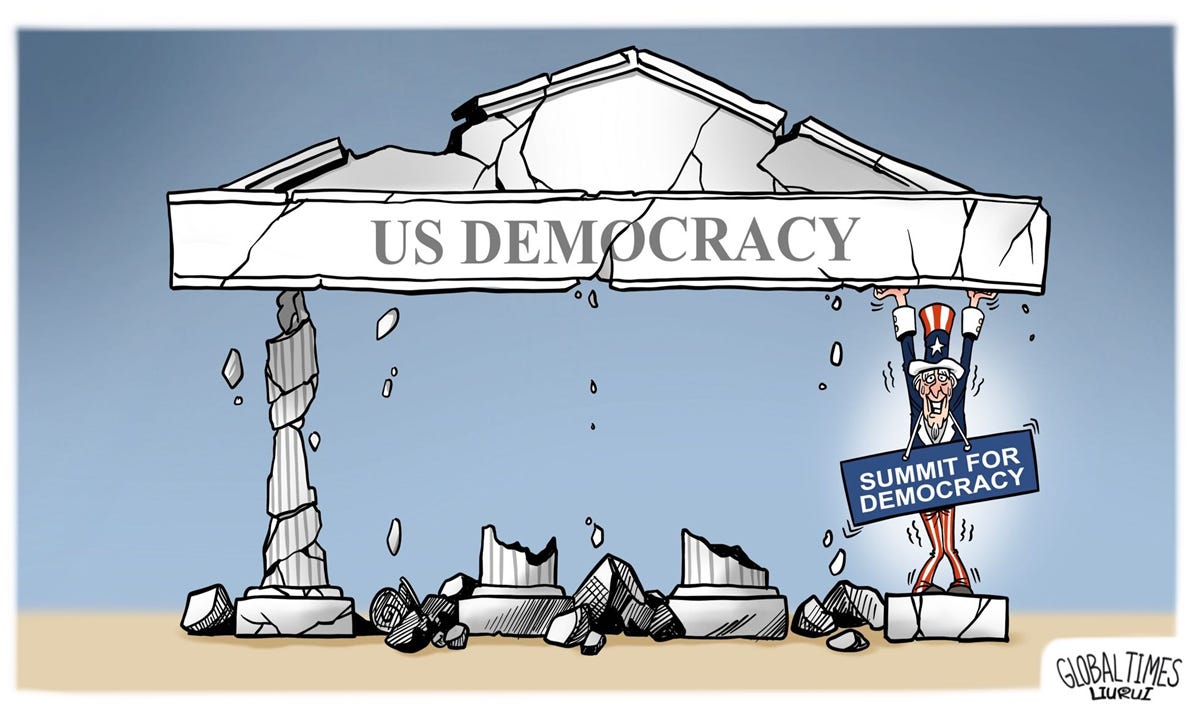
American democracy is broken. In poll after poll, voters return dour outlooks on the state of our republic. In one survey, nearly 90% of Americans agreed that our democracy is in crisis. In another, 72% said the United States is not a good example of democracy anymore. It is an almost ubiquitous belief that the nation has become intractably polarized, factionalized, and divided into camps where partisan or cultural loyalty has replaced any sense of shared American identity.
For many young people, this collapse in support isn’t sudden, but inevitable. For us, we have come of age during an era of increasingly common government shutdowns, an octogenarian government, unending electoral controversy, an increasingly partisan and unresponsive Supreme Court, and a social culture that seems to reward outrage more than progress. In our educational and social networks, we’ve been raised on the idea that America and its democracy are shining examples of mature, pluralistic societies, and yet the system we’re inheriting feels rigid, unresponsive, and incapable of addressing emerging problems defining modern life with any modicum of speed or effectiveness.
Given the current state of the nation, the only thing that may be able to garner bipartisan consensus is that incremental reform will not fix the issues we face. With income inequality reaching historic highs, large corporations becoming increasingly monopolistic, wage growth lagging behind inflation, and more families forced to choose between childcare and healthcare, the next generation of leaders cannot pretend that our institutions, or indeed our system, are functioning as intended. For example, the entire idea behind the Electoral College, which is what formally elects the president, was that people would have a personal relationship with their elector, who would then vote in their best interests to elevate someone to the presidency. Can you name a single person who has served as an elector, ever? I can’t.
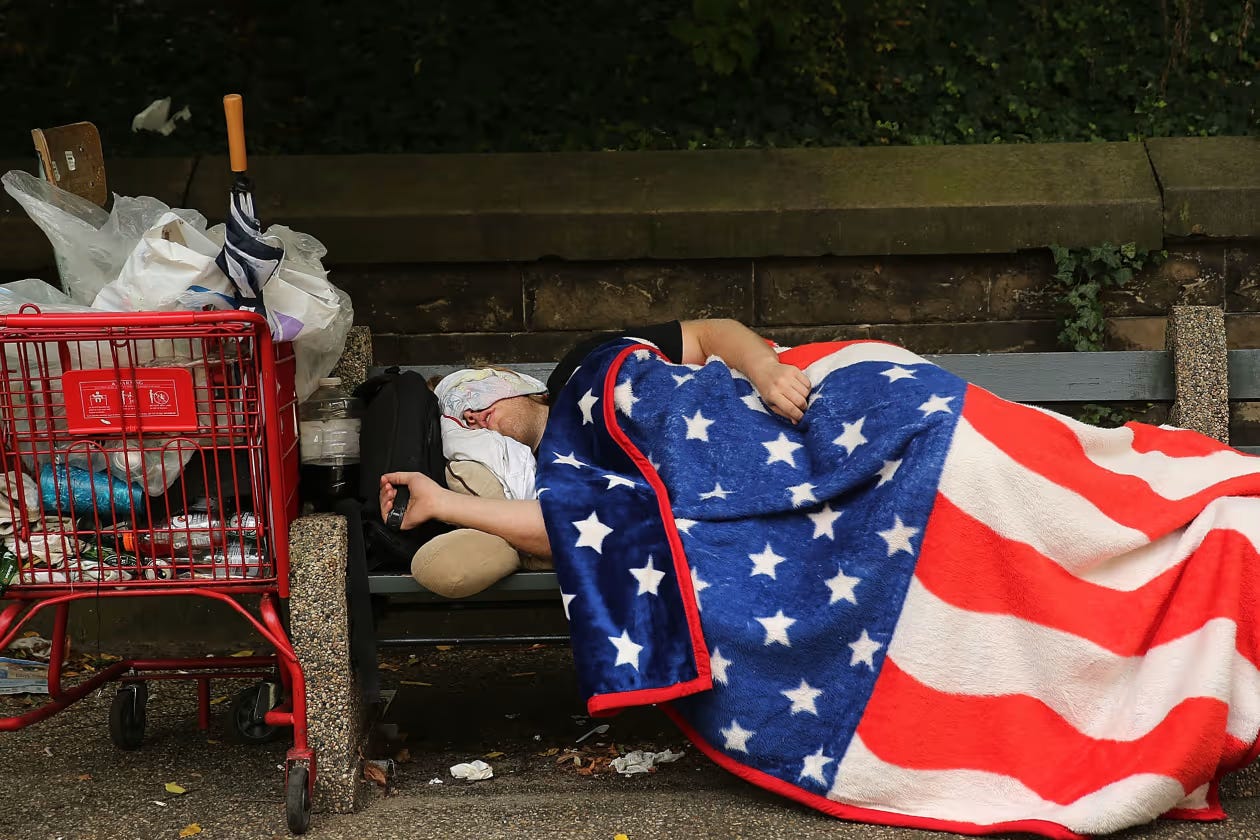
The dysfunction we see in our economy is not isolated, nor is it separate from the dysfunction within our democratic system. In many ways, it flows directly from it. A political structure that cannot represent people effectively will inevitably produce an economy that doesn’t work for them, either.
Such a realization leads only to one unavoidable truth: to survive, the United States requires structural, fundamental reforms to our democratic, economic, and social systems. Our current system was designed for a country of four million people stretched along the Atlantic coast and isolated from world affairs. Today, we are a continental nation of more than 340 million operating in a globalized, digital world of which we are an undisputed superpower. It should come as no surprise that institutions designed in the eighteenth century struggle to keep up with the demands of the twenty-first.
However, these issues, like so many others, were not created by young people, and yet their burden will fall upon us. We don’t have the luxury of nostalgia or of dreaming of making America “great again,” because for us, it was never great. Our generation will either reform American democracy or, possibly, live to see its demise. The only question we must ask ourselves is two-fold: do we believe America remains worth fighting for, and if so, what are we willing to do in her defense?

I still believe in the promise of America. I still believe that we have it within ourselves to be that shining city on a hill described by President Reagan and reaffirmed throughout history. Below is a compendium of possible solutions to help us escape the morass in which we find ourselves and maybe, just maybe, emerge stronger for it. These proposals are not meant to all be enacted, but to give you the chance to see that, despite the noise, there remains a path to a better tomorrow. With that, how the hell can we fix it?
A Big House, Made Bigger
The U.S. House of Representatives currently has 435 members, a number unchanged since 1929. For anyone who’s taken a civics lesson, it feels so permanent that many assume it to be fixed within the Constitution. It isn’t.
For much of American history, Congress regularly expanded the House to reflect population and geographic growth. The idea was perfectly simple: the chamber closest to the people should remain, well, close to the people. At the founding, one representative served roughly 30,000 constituents. Lawmakers could realistically know their districts, their communities, and many of the people they represented.
Today, a single member of Congress represents roughly 750,000 Americans.
To put that into perspective, that is larger than the population of many entire countries. No matter how talented or well-staffed a congressional office might be, no single elected official can meaningfully represent that many people spread across dozens of communities and competing interests. As someone currently working in the district office of a member of Congress, I see the strain of this overstretching firsthand. Constituents reach out with real, life-defining issues surrounding healthcare disputes, veterans’ benefits, and immigration cases. Despite the world-class public servants who work as hard as they can every day, even they can only do so much when the scale becomes that large.
To understand why the House needs to grow, we must first understand why it stopped growing initially.
The answer, unsurprisingly, is politics. In the early twentieth century, America was rapidly urbanizing. Millions of people were moving from rural communities into expanding cities, spurred on by the Industrial Revolution. Congressmen representing rural areas quickly realized that, if representation continued expanding in proportion to population growth, political power would shift toward urban areas permanently. Rather than allow that to happen, Congress passed the 1929 Reapportionment Act, capping the House at 435 members and automating decennial reapportionment.
What began as a political compromise eventually hardened into the structural flaw we see today.
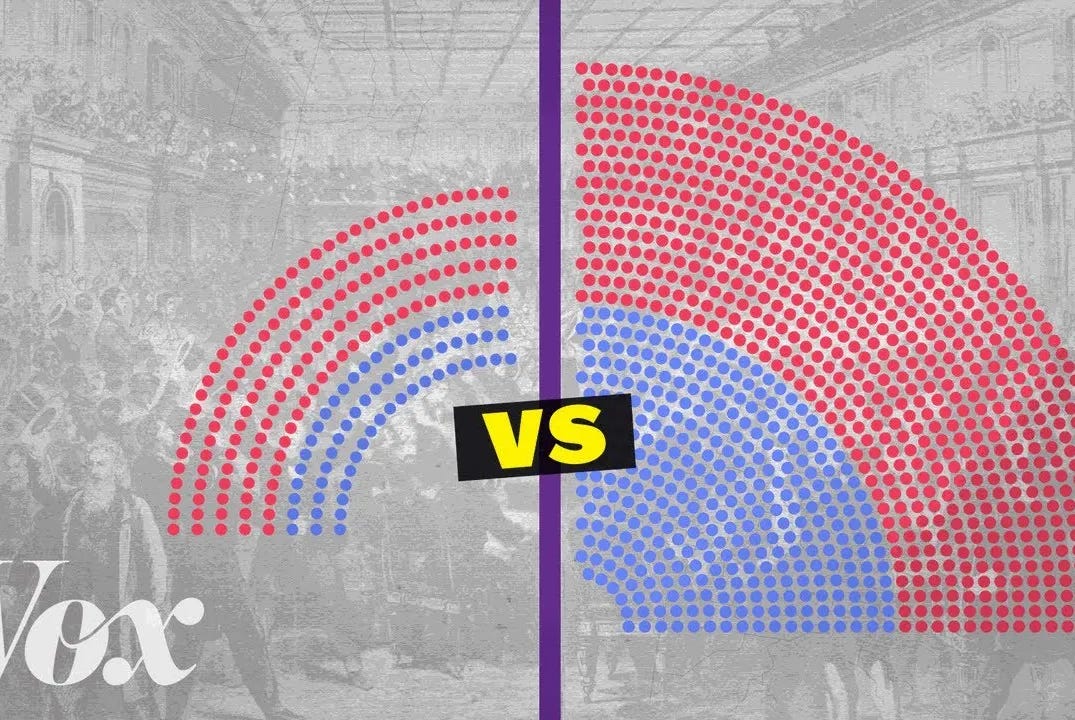
If we want the House of Representatives to actually be representative again, it needs to grow. Unlike President Reagan’s 1981 declaration that “big government is the problem,” we, ironically, need to make government bigger to make it more responsive and representative. There are several approaches to enlargement, whether that be the Wyoming Rule, the Cube Root Rule, and others, but for simplicity’s sake, I’ll discuss the most direct and digestible, which is capping districts at 500,000 residents. Doing so would expand the House to the tune of over 100 additional members, bring representatives closer to their communities, reduce the influence of massive fundraising networks, and make elections more competitive. Smaller districts also complicate gerrymandering efforts and encourage a greater diversity of candidates to run for office.
For a body designed to reflect the people, the House has become unsustainably distant from them. Expanding it would be one of the simplest ways to begin correcting that.
Cracking the Two-Party System
It’s fairly safe to say that the Democratic and Republican parties contain within them a broad spectrum of opinions. Depending upon your beliefs, you may find yourself confused as to how you and someone else could claim to belong to the same political party. The reason we do is because of our winner-take-all electoral system, in which whoever gets the most votes wins. This serves to depress third-party candidates, who tend only to siphon votes from one of the major parties, actually aiding the opposing party.
The two-party system in America was never intended by the founders, nor is it doing anything but damaging and dividing our republic. One step to rectifying this is rethinking how we elect members of Congress in the first place. What if, instead of one candidate emerging in one district merely by winning the most votes at the expense of all other voters, seats were allocated proportionally to reflect the will of all the voters within that district?
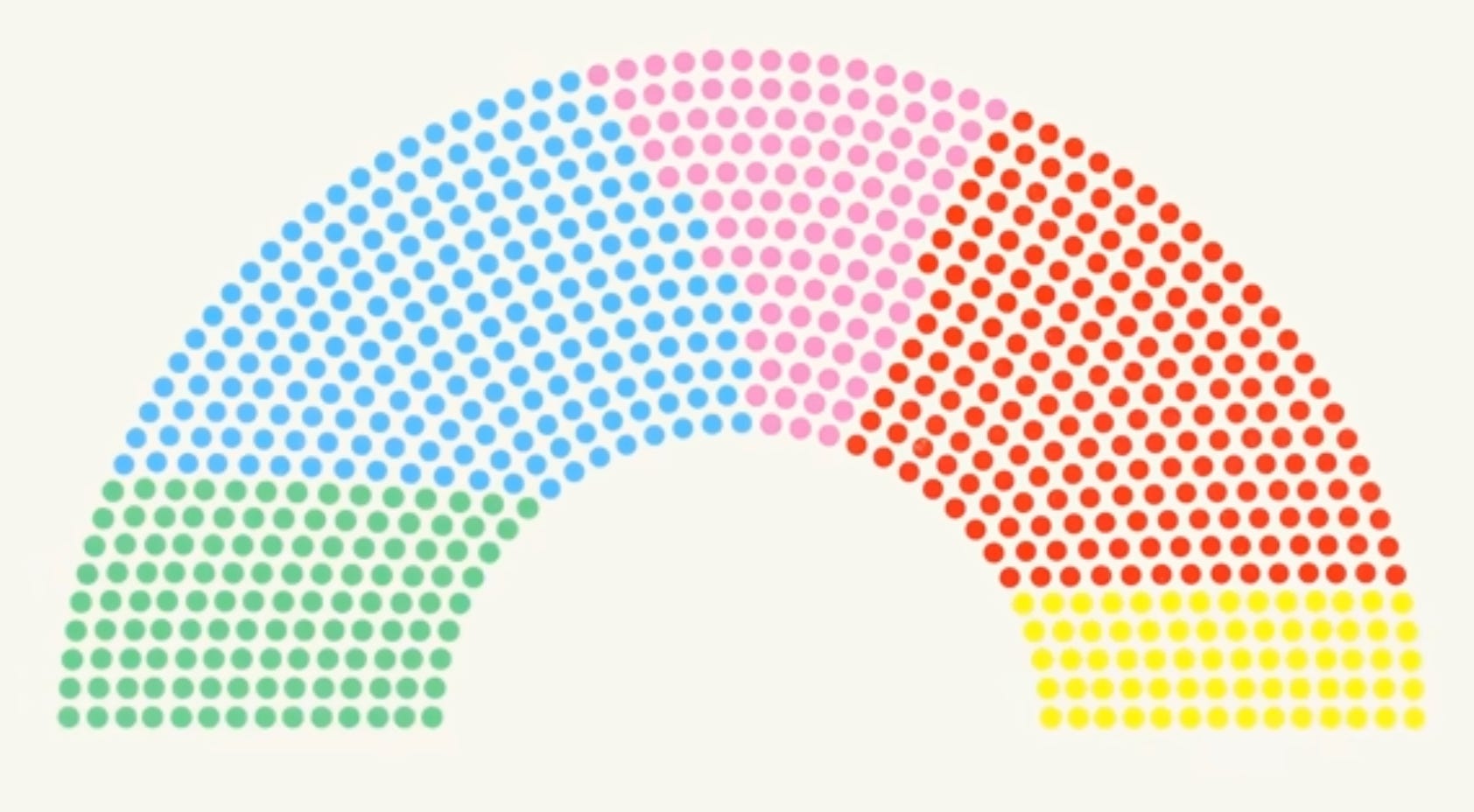
Under proportional systems, seats are distributed based on the share of votes each party or coalition receives. If a group of voters wins 30% of the vote, they receive roughly 30% of the representation. Instead of entire states or districts being politically monolithic, multiple perspectives gain a seat at the table.
Applying this idea to the House of Representatives could transform American politics overnight. Third parties could mount credible campaigns that translate into actual representation in Congress, not merely protest votes. It would encourage coalition building rather than partisan warfare and ensure that political minorities, wherever they exist, are still represented.
The idea of representation is both the most important and most threatened ideal of democracy in America today. Democracies rest upon the consent of the governed, and yet over the last decade, but particularly in the last year, we’ve seen states engage in a “race to the bottom” strategy of seeing who can enact the least representative maps that exact the largest partisan advantage for the party in power. We’ve seen it in Texas, Ohio, Missouri, California, Texas, and others. A proportional system would fix such an issue.
This same logic could, and should, apply to the U.S. Senate and the Electoral College. Senate representation could allocate votes proportionally, where, for example, senators in Texas would have more of a say than senators in Wyoming, given they have 57 times more people. The Electoral College could allocate its electoral votes proportionally, too, rather than through winner-takes-all systems that currently dominate presidential elections. Instead of seven swing states, each of which is decided by under five percent, and yet each of whom allocate one-hundred percent of its electoral votes to whichever candidate wins one more vote, the will of every state could be more fairly represented.
In short, democracy should measure public opinion, not distort it.
Making the Supreme Court Great Again
No discussion about democratic legitimacy can ignore the Supreme Court. In recent years, public confidence in the Court has declined dramatically, not only because of controversial decisions (though there have been MANY), but because the institution itself appears increasingly detached from the country it governs.
The modern Court sits almost permanently in Washington, issuing rulings that shape the lives of millions while remaining insulated both from any public accountability and from the legal system upon which it sits. Though it may surprise you to learn, that structure was not the norm. In the early years of the republic, Supreme Court justices traveled the country hearing cases on circuit alongside lower-court judges. They were forced to face the communities their rulings would directly impact, and weren’t allowed to hide away behind tradition and process anytime a controversial decision was made.
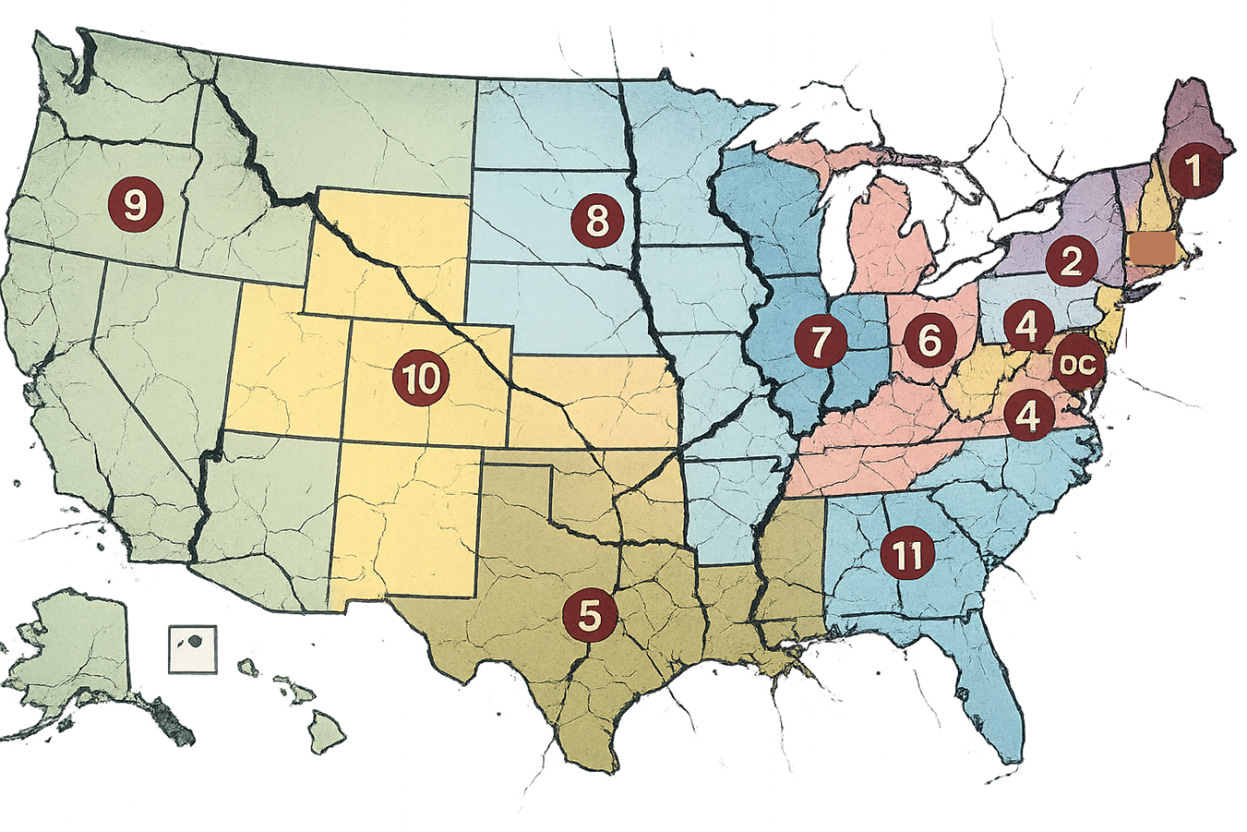
Restoring some version of that system could reconnect the Court with the broader legal landscape and with the people affected by its rulings. A traveling circuit of justices would make the Court less remote and remind both the judiciary and the public that constitutional interpretation is not an abstract exercise but something rooted in real communities and real disputes.
Additionally, a Supreme Court forced to travel would encourage justices of an advanced age to retire and allow younger, more physically capable justices to take their place, helping to continually refresh the Court’s collective legal thought and, ideally, end the age of eighty-year-olds ruling by fiat from the highest court in the land. Combined with stronger ethics rules and clearer institutional norms, such reforms could help rebuild public trust in one of the most powerful bodies in American government.
The Honorable Mentions
There are several reforms worth mentioning that I chose not to focus on at length here, not because they lack merit, but because they have already begun to enter the mainstream of conversations focused on reform. My goal in this is not merely to repeat ideas said before, but to present novel ideas as to how we might salvage the only democracy we’ve ever known. Nevertheless, several ideas are at least worth briefly acknowledging.
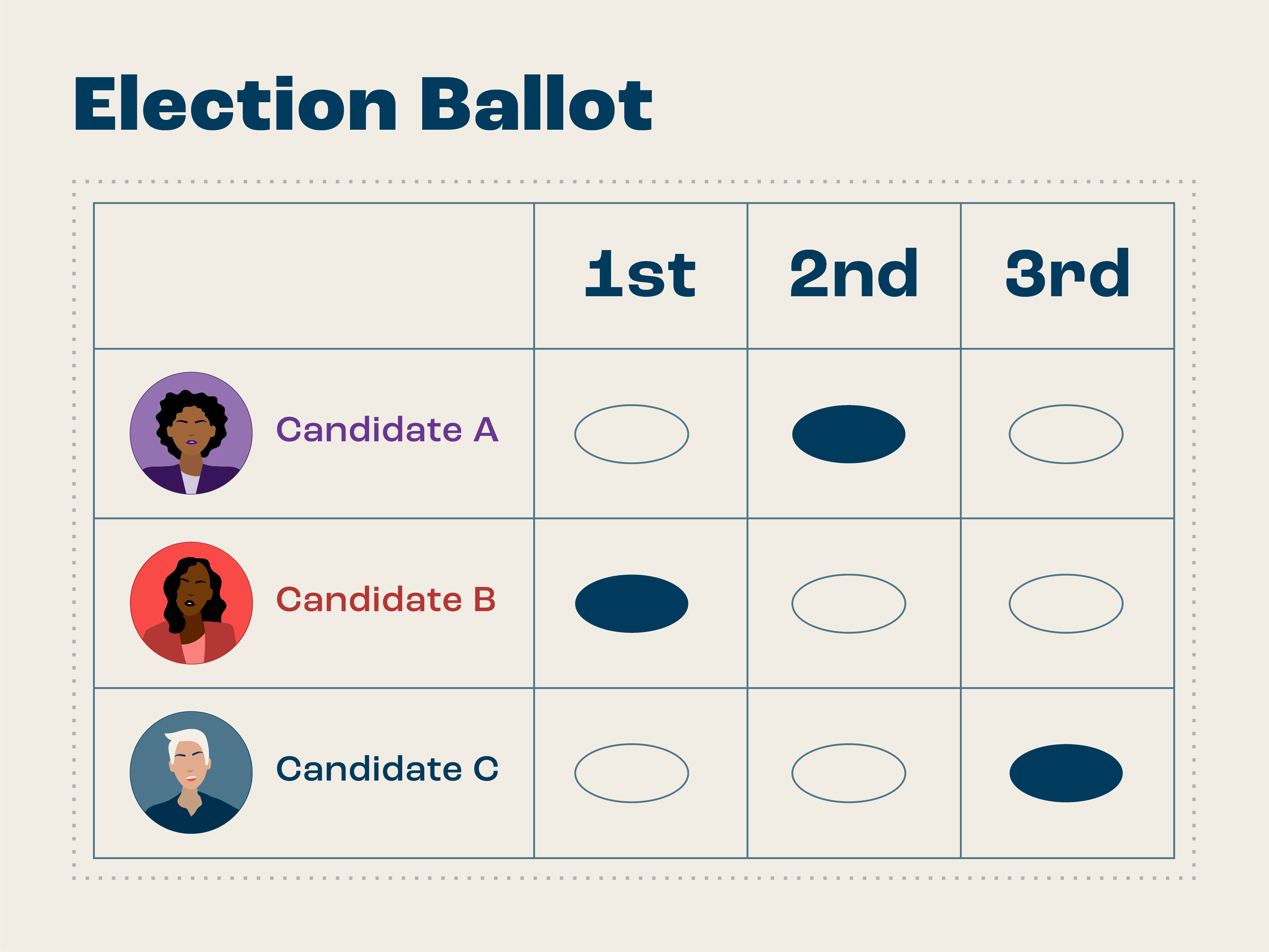
Ranked-choice voting is perhaps the most visible of these proposals. By allowing voters to rank candidates rathe than choose only one, ranked-choice systems encourage majority support and reduce the spoiler effect that discourages many people from voting for the candidates they actually prefer. In places where it has been implemented, campaigns tend to become less hostile and more coalition-oriented. It is not a cure-all, but it is a meaningful step toward elections that better capture what voters really want.
Another frequently discussed reform involves the Supreme Court. Lifetime appointments to the Court made sense in a world where life expectancy was shorter and the Court heard far fewer politically consequential cases. Today, however, vacancies appear almost randomly and can shape constitutional law for generations. Establishing regular interval appointments, like a new justice every 2 years, meaning each justice would serve an 18-year term, would reduce the stakes of any single confirmation battle and create a predictable, less politiczed system of judicial turnover.
Finally, there is the issue of redistricting. Perhaps the most glaring shortcoming of our founding documents is the decision to allow politicians to draw their own districts. Allowing these politicians to draw their own districts has produced some of the most distorted maps imaginable. Independent, nonpartisan redistricting commissions offer a straightforward alternative. By transferring map-drawing authority away from legislatures and toward bodies designed to prioritize fairness and community representation, elections become more competitive and voters gain greater confidence that outcomes reflect genuine public sentiment rather than careful political engineering.
Each of these reforms deserves serious attention. The reason they appear here as honorable mentions is not because they’re unimportant, but because they already each have their own place in the growing national conversation about improving American democracy.

All of these reforms face long odds. Many of them would require amendments to the United States Constitution, something which hasn’t happened formally in a century. However, there was a time when amendments that we now take for granted seemed equally unlikely. There was a time when womens’ suffrage seemed far off, when lowering the voting age to 18 seemed unlikely, and other such examples. Yet, through advocacy, protest, and organization, they each were ratified. That is to say, anything is impossible until it’s possible. Merely because it seems unlikely doesn’t mean we shouldn’t still try. None of those victories were quick, and none of them seemed particularly likely at the moment the ideas were first proposed. What changed was not merely political leadership but public imagination. Enough Americans began to believe that the system could be different—and that belief, over time, became stronger than the resistance to change.
A Democracy Worth Inheriting
All of these proposals share a common premise: democracy is not a sacred architecture handed down unchained through time. It is a system designed by people, and like any system must evolve if it is going to function.
Throughout American history, moments of democratic renewal have required structural change. Expanding voting rights, introducing the direct election of senators, reforming civil service, and passing voter protections were all controversial in their time. Yet today we recognize them as necessary steps in building a more representative republic.
Our generation, and all Americans, now face a similar moment. We can either pretend that the system works as intended, or we can acknowledge that it was built for a different era and must be redesigned for the world we actually live in.
Democracy is broken, but it isn’t yet beyond repair. The real question is whether we still believe in our ability to build something better. I do. Do you?
My Pitch
I am a college sophomore at the University of Richmond studying Political Science, Leadership Studies, and Economics. I do not pretend to be a member of the “intelligentsia,” or of the “intellectual elite.” The articles I post are what I’m feeling, when I’m feeling it. My opinions are my own, and are not a reflection of my educational institution.
By subscribing to this Substack, you can help support a college student’s dream of making news more accessible to young people. It costs nothing, but means everything.